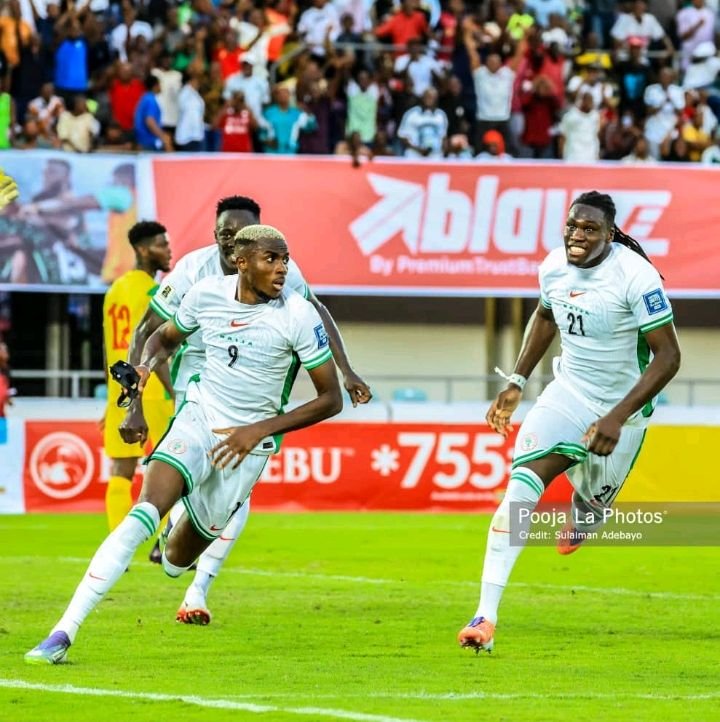
When the final penalty kick sailed into the net in Rabat, the Democratic Republic of Congo sealed a dramatic victory that ended Nigeria’s World Cup qualification hopes on the pitch. For Congolese players and fans, it was a night of celebration. For Nigeria, it was heartbreak.
Weeks later, that result is now under formal scrutiny — not by referees, but by FIFA.
The Nigeria Football Federation (NFF) has officially petitioned FIFA to investigate whether the Democratic Republic of Congo fielded players who were ineligible under FIFA regulations and Congolese nationality law during the decisive playoff match. FIFA, according to multiple reports, has opened an inquiry into the matter.
What Nigeria is alleging
NFF Secretary General Dr. Mohammed Sanusi confirmed publicly that the federation submitted evidence questioning the eligibility of certain DR Congo players. According to Sanusi, the issue is not merely possession of passports but whether the legal process required under Congolese law was properly followed.
“FIFA was deceived into clearing those players,” Sanusi stated, explaining that the players in question allegedly did not meet the legal requirements governing nationality changes under DR Congo law.
Several Nigerian media outlets report that the petition involves multiple players, with figures ranging between six and nine individuals. The core of the complaint is that DR Congo’s domestic law does not recognise dual nationality, and that the necessary legal steps — including formal renunciation of prior citizenship — may not have been completed before the players were cleared to represent the country.
FIFA rules and the legal grey area
Under FIFA regulations, a player must hold the nationality of the country they wish to represent and must comply with the change-of-association rules where applicable. While FIFA introduced a digital Change of Association Platform in 2025 to streamline approvals, the process still relies heavily on documentation supplied by national federations.
Crucially, FIFA approval does not replace domestic nationality law. If documents submitted to FIFA do not accurately reflect a player’s legal status under national law, the approval itself can be challenged.
This is the legal space Nigeria’s petition occupies.
What is at stake
If FIFA determines that ineligible players were fielded, sanctions could range from fines to match forfeiture. In extreme cases, results can be overturned, which could reopen Nigeria’s path to the intercontinental playoffs.
However, football governance experts caution that such outcomes are rare and depend entirely on documentary evidence and legal interpretation. FIFA has not issued any ruling or provisional decision, and the investigation remains ongoing.
What is confirmed — and what is not
Confirmed facts:
DR Congo defeated Nigeria in the playoff on penalties.
The NFF has formally petitioned FIFA over alleged player ineligibility.
FIFA is examining the complaint, according to multiple media reports.
NFF officials have publicly explained the basis of their claim.
What is not public:
The full list of players named in the petition.
The exact documents submitted by DR Congo to FIFA.
FIFA’s investigative findings or timeline for a decision.
Without access to these materials, independent verification of individual player eligibility is not currently possible.
Key questions FIFA must answer
Which players were the subject of the eligibility challenge?
What nationality documents were submitted for FIFA approval?
Did those documents fully comply with Congolese law?
What level of verification did FIFA conduct beyond federation submissions?
If violations are confirmed, what remedy applies under FIFA statutes?
Why this matters beyond Nigeria
This case highlights a recurring tension in international football: the intersection of national citizenship laws and FIFA’s eligibility framework. As more players switch associations, especially across African and European borders, disputes over nationality documentation are becoming more frequent — and more legally complex.
What comes next
Until FIFA releases its findings, the situation remains unresolved. Nigeria’s World Cup hopes are not restored — but they are no longer closed.
The final decision will not be decided by emotion, pressure, or public opinion, but by documents, statutes, and the interpretation of law.
For now, the only accurate conclusion is this: Nigeria has lodged a formal complaint; FIFA is investigating; and the outcome will determine whether a match decided by penalties could be reshaped by paperwork.