

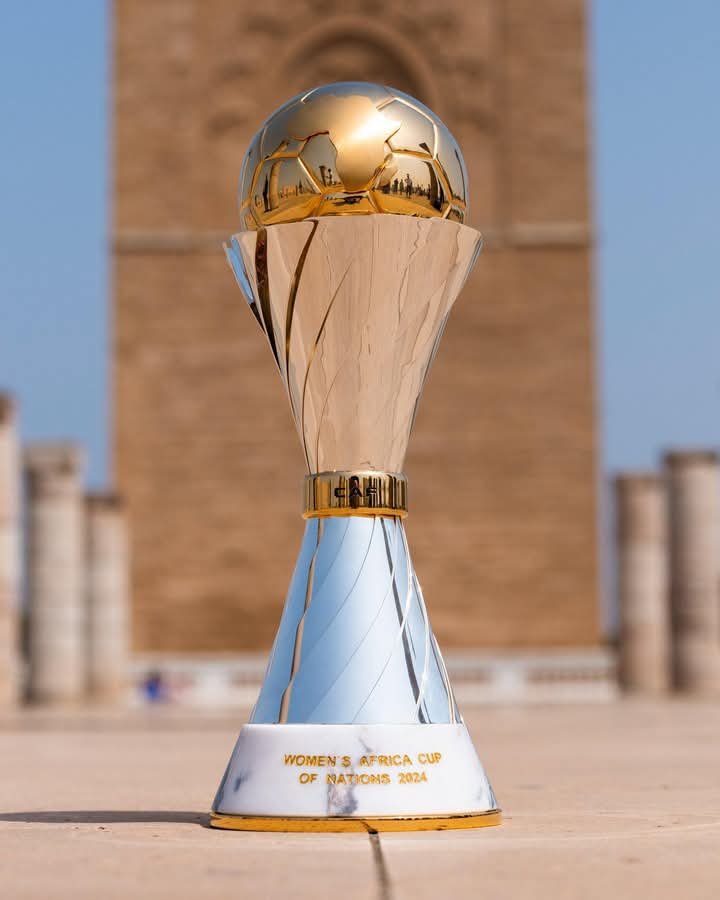
The group stage has delivered its verdicts, the pretenders have been sorted from the contenders, and eight teams now stand one win away from a place in the WAFCON 2026 semi-finals and an automatic ticket to the 2027 FIFA Women’s World Cup in Brazil.
How they got here
Morocco topped Group A in front of their own fans, needing only a point from their final match. A goalless draw with Senegal was enough to see the hosts finish first, having already beaten Zambia and DR Congo earlier in the group.
Algeria followed them through, finishing on seven points to edge out the Atlas Lionesses’ closest challengers.
Group B belonged to Côte d’Ivoire and South Africa. Ivory Coast secured top spot with a 2-1 victory over Tanzania, while South Africa edged out Burkina Faso 1-0 to claim the second qualifying berth on the final matchday.
Group C produced the tournament’s wildest storyline. Nigeria finished their campaign in style, hammering Egypt 6-2 with goals from Oshoala, Gift Monday, Kanu, Ucheibe, Ajibade and Omewa. [
But the group came down to a rare tiebreaker. Malawi, Nigeria and Zambia all finished level on six points, forcing officials to apply a seldom-used CAF head-to-head rule to separate the trio and it was Malawi, not Zambia, who came out on top despite losing 2-1 to Zambia in their final group match.
Malawi’s run has been a genuine fairytale: they beat Nigeria 3-2, defeated Egypt 3-1, and only fell to Zambia in their last outing,yet still advanced on the head-to-head calculation.
Group D delivered the final two names. Cameroon were ruthless throughout. They beat Ghana 1-0 through a Marie-Gisèle Ngah Manga penalty to become the first team through to the quarter-finals, then sealed top spot in the group with a 1-1 draw against Cape Verde.
Ghana had to survive a late scare to join them. The Black Queens needed a 1-1 draw against Mali on the final day, with Evelyn Badu scoring off a Comfort Yeboah assist before Mali equalised through a Kadidiatou Diabate free-kick.
Breaking down the ties
Côte d’Ivoire vs Algeria— Saturday, 6pm, Moulay Rachid Stadium, Casablanca
Côte d’Ivoire arrive as group winners with confidence following their win over Tanzania, but Algeria’s route through a stacked Group A, finishing above Senegal and DR Congo, suggests a side battle-tested against quality opposition. Expect a tight, tactical opener where Algeria’s discipline could trouble an Ivorian side yet to face a true heavyweight.
Morocco vs South Africa— Saturday, 9pm, Moulay El Hassan Stadium, Rabat
The hosts carry the weight of a nation and the momentum of an unbeaten group campaign, but South Africa should not be underestimated. Banyana Banyana ground out a professional 1-0 win over Burkina Faso to qualify and bring recent continental pedigree as defending champions from a previous cycle.
Morocco’s home advantage and attacking depth make them favourites, but South Africa’s experience in knockout football could make this the tie of the round.
Cameroon vs Nigeria — Sunday, 6pm, Larbi Zaouli Stadium, Casablanca
This is the standout fixture of the quarter-finals. Cameroon go in unbeaten across the group stage, conceding just once and showing defensive solidity alongside clinical finishing. Nigeria, by contrast, needed a dramatic final day and a tiebreaker just to survive Group C, but their attacking firepower six goals against Egypt alone makes them dangerous regardless of how bumpy the road here was.
The Super Falcons are defending champions, having stunned Morocco from two goals down in last year’s final, and that pedigree under pressure could prove decisive against a Cameroon side yet to be truly tested.
Malawi vs Ghana — Sunday, 9pm, Al Madina Stadium, Rabat
The underdog story of the tournament collides with a Ghana side that barely scraped through themselves. Malawi have already beaten Nigeria and Egypt this tournament, proving they fear nobody, while Ghana’s stuttering draw with Mali exposed real vulnerabilities in front of goal.
On paper this looks the most open of the four ties a genuine coin-flip between two teams desperate to keep their World Cup dream alive.
What’s at stake
The format leaves no room for margin. All four teams that reach the semi-finals on 12 August will secure automatic qualification for the 2027 FIFA Women’s World Cup in Brazil.
The four losing quarter-finalists are not finished, however they will contest an additional play-off round on 13 August, with the two winners advancing to a FIFA intercontinental play-off for one final shot at Brazil 2027.
The final will be played in Rabat on Sunday, 16 August, with the semi-finals set for 12 August. [