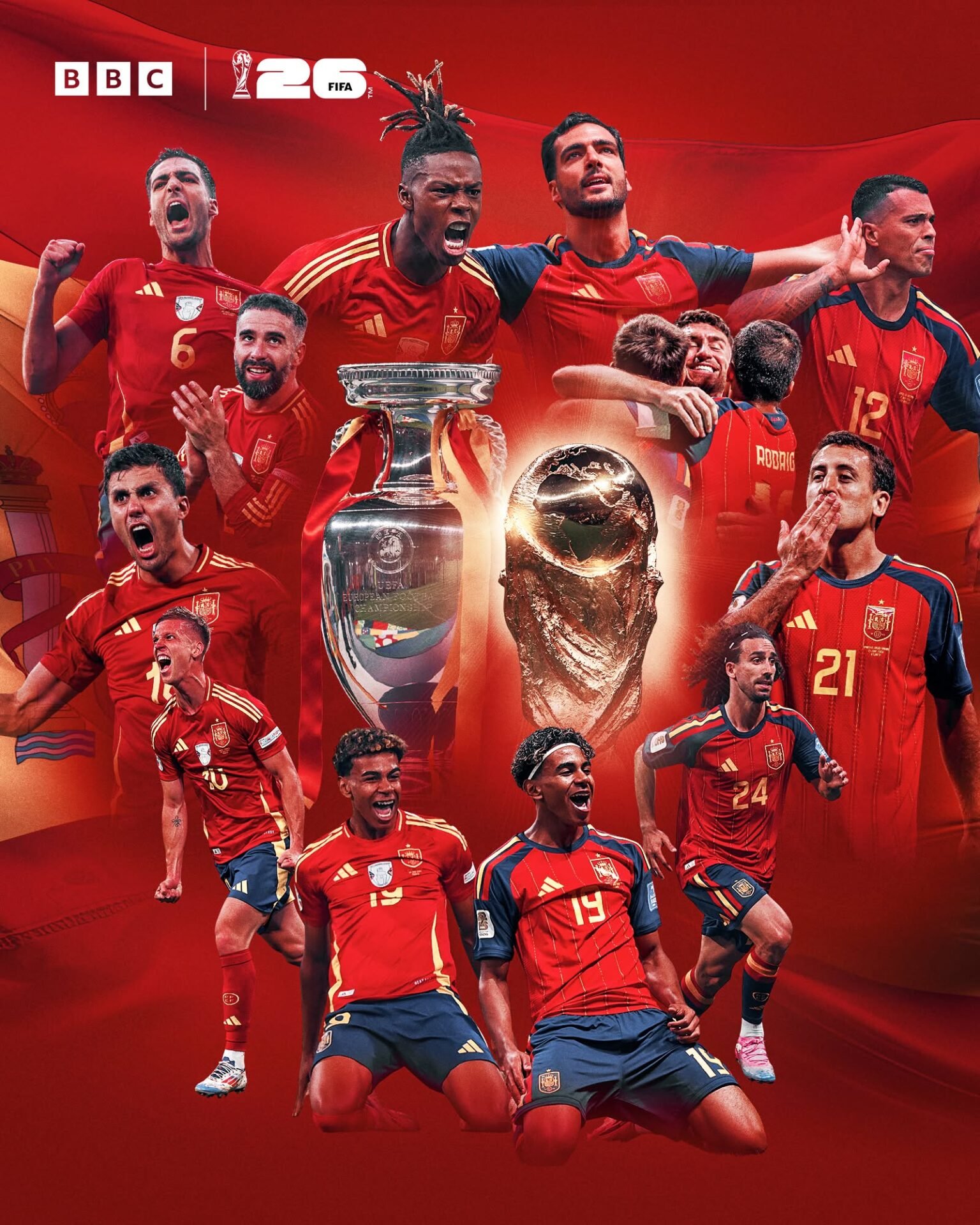
Sapin came, saw and conquered.
The 120-minute showdown delivered everything football fans had anticipated and more. Spain refused to fade away, displaying their true colors with authority in the final of the 2026 World Cup against the defending champions Argentina.
It remained tense throughout the full 90 minutes and into extra time, but the reigning European champions proved their mettle on the grandest stage. Fans witnessed absolute pure class as Argentina struggled to dominate or even register a meaningful shot on target. La Roja, on the other hand, grasped the assignment perfectly. They relentlessly created opportunities, launching 20 attempts at goal with 12 striking on target.
Player ratings told the full story Spain dominated from side to side, leaving the Argentine side helpless, including the legendary Lionel Messi.
Enzo Fernández of Chelsea Football Club drew widespread criticism for perhaps running after trouble. The first yellow card appeared unnecessary, yet it failed to restrain him. He charged ahead and collected a second, earning a red card that further crippled Argentina’s hopes.
The Spanish national team entered the final having conceded just one goal throughout the tournament. They maintained that formidable defensive structure across the 90 minutes plus extra time. Pressure mounted intensely for both sides and the millions watching, but Ferran Torres stole the spotlight in the 106th minute. He netted his first World Cup goal, breaking the deadlock and sending Spanish supporters into ecstasy.
As if that strike did not suffice, Torres nearly doubled the advantage moments later. Only a flag for a foul following a build-up error denied him. It is also worth noting that Nico Williams had earlier found the net in the second half, yet officials flagged it for a foul.
Argentina desperately sought a reply to equalize and shift the narrative. Julián Álvarez of Atlético de Madrid squandered a golden opportunity, leaving his team and fans helpless. The defining moments unfolded as Spain lifted the trophy for the second time since their 2010 triumph. Congratulations poured in for La Roja.
Both nations carved dramatic paths to this grand finale. Argentina, the defending champions from Qatar 2022, entered the tournament as heavy favorites seeking a historic back-to-back title.
They navigated a competitive group stage with commanding performances, showcasing their trademark resilience and attacking flair led by an aging but still inspirational Messi. In the knockout rounds, La Albiceleste overcame tough opponents through gritty comebacks and moments of individual brilliance. They edged past strong challengers in the round of 16, quarter-finals, and semi-finals, relying on defensive solidity and clinical finishing.
History favored them heavily Argentina boasts three previous World Cup titles (1978 as hosts, 1986 with Diego Maradona’s magic, and 2022). They reached the final on four other occasions (1930, 1990, 2014), establishing themselves as one of the most successful nations in the competition’s rich history. Their 19 appearances underscore consistent excellence.
Spain, meanwhile, arrived with renewed confidence after winning Euro 2024. Under coach Luis de la Fuente, La Roja blended youthful exuberance with experienced leadership. They started the group stage cautiously with a draw but quickly found their rhythm, delivering dominant victories that highlighted their possession-based style mixed with vertical pace.
In the knockouts, Spain dismantled opponents methodically clean sheets and clinical efficiency defined their run. They defeated formidable sides including Portugal and France en route to the final. Historically, Spain’s World Cup journey includes 17 appearances.
Their crowning glory came in 2010 in South Africa, where they pioneered tiki-taka mastery to claim their first title. Earlier best finishes included fourth place in 1950 and several quarter-final exits. Post-2010 disappointments in group stages and round-of-16 exits fueled their hunger for redemption in 2026.
The final itself unfolded as a masterclass in tactical discipline and opportunistic brilliance. From the opening whistle, Spain dictated tempo with quick, accurate passes that stretched Argentina’s defense. They pressed high, forcing errors and creating transitions. Argentina countered with determined midfield battles and occasional flashes of Messi genius, yet they rarely threatened the Spanish goal. The first half ended goalless despite Spain’s territorial dominance and multiple near-misses.
After the break, intensity surged. Nico Williams thought he had scored, but the assistant’s flag halted celebrations. Argentina pushed forward, creating their best chance through Álvarez, who fired wide under pressure.
As fatigue set in during regular time, both teams traded cautious probes. Extra time brought renewed vigor. Spain capitalized on a swift counter-attack. Ferran Torres received a precise through ball, composed himself, and slotted past the keeper in the 106th minute.
The stadium erupted. Argentina threw everything forward in response, but Spain’s backline, marshaled impeccably, stood firm. Torres nearly added another, only for the decision to go against them.
The final whistle confirmed Spain’s victory in a match defined by La Roja’s efficiency against Argentina’s inability to break through.
This triumph marks a new era for Spanish football. Young talents like Lamine Yamal complemented veterans, signaling sustained success. For Argentina, the defeat stings but cements Messi’s legacy as he bows out from World Cup action. The 2026 final will be remembered as a passing of the torch from one footballing giant to another.