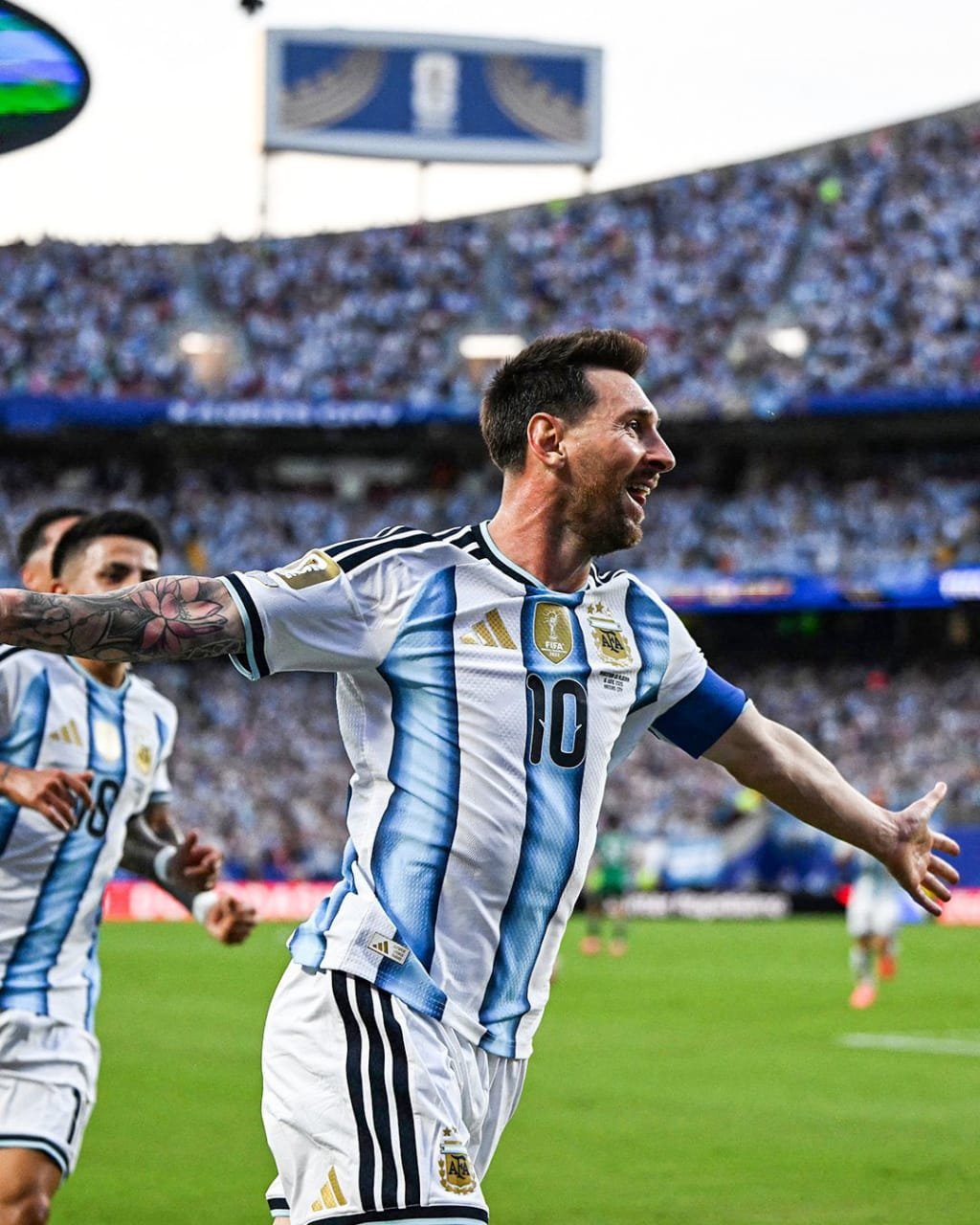
Argentina are back in the World Cup semifinals, but their journey has been far less comfortable than the results suggest.
The defending champions have shown courage, experience and an ability to survive difficult moments. However, they have also looked vulnerable against teams they were expected to beat comfortably.
Argentina narrowly defeated Cape Verde 3–2 in the Round of 32. They then came from two goals behind to beat Egypt 3–2 in the Round of 16.
Their quarterfinal against Switzerland also required extra time. Argentina eventually won 3–1, but the match was level after 90 minutes.
These performances raise several questions.
Why have Argentina struggled so much in the knockout stage? Are they too dependent on Lionel Messi? And is there any truth behind claims that FIFA wants Argentina to progress?
Argentina’s Results Have Been Better Than Their Performances
Argentina have won every match required to reach the semifinals.
However, winning does not always mean a team played well.
Cape Verde scored twice against Argentina and remained competitive until the end. Egypt went even further by taking a 2–0 lead and pushing the defending champions close to elimination.
Switzerland also troubled Argentina for long periods. The Swiss equalized in the second half and forced the match into extra time before late goals from Julián Álvarez and Lautaro Martínez settled the contest.
Argentina deserve credit for surviving these difficult matches.
At the same time, their performances have exposed weaknesses that England may try to exploit in the semifinal.
Argentina’s Defence Has Looked Vulnerable
Argentina were known for their defensive strength during their 2022 World Cup victory.
The team defended as a unit. The midfield protected the back line, while defenders won important individual battles.
That control has not always been present in 2026.
Cape Verde scored twice. Egypt also scored twice and created enough chances to threaten a major upset.
Switzerland found space in the second half of the quarterfinal and equalized through Dan Ndoye. Argentina needed important saves from Emiliano Martínez to remain in the game.
Argentina’s defenders are still experienced, but the space in front of them has become more difficult to control.
When the midfield pushes forward, opponents can attack quickly through the middle or behind the fullbacks.
That could be dangerous against England, especially with players capable of carrying the ball at speed.
The Midfield Has Not Controlled Matches Consistently
Argentina have several high quality midfielders.
Alexis Mac Allister, Enzo Fernández and Rodrigo De Paul can press, pass and support the attack.
However, the midfield has not always controlled the rhythm of knockout matches.
Egypt disrupted Argentina with energy and direct football. Switzerland also made the game physical and uncomfortable.
Argentina often looked strongest when chasing a goal rather than when trying to control the match from the beginning.
That is both a strength and a warning.
Their fighting spirit is outstanding, but a defending champion should not need a dramatic comeback in every round.
Opponents Are No Longer Afraid of Argentina
Argentina entered the tournament as defending champions and one of the favourites.
That reputation can sometimes intimidate opponents.
However, Cape Verde, Egypt and Switzerland played with confidence.
They pressed Argentina. They attacked when opportunities appeared. They also refused to spend the entire match defending near their own penalty area.
Egypt’s performance was particularly important.
The African side took a 2–0 lead and came close to producing one of the biggest upsets in World Cup history. Argentina eventually recovered, but the match showed that they can be hurt when opponents play without fear.
Teams now appear to believe that Argentina can be beaten.
That belief makes every match more difficult.
Argentina Are Still Too Dependent on Lionel Messi
Lionel Messi remains the most important player in the Argentine team.
His influence is not limited to goals.
He creates chances, attracts defenders and controls the tempo in attacking areas. His presence also gives teammates confidence during difficult moments.
Against Switzerland, Messi provided the corner from which Mac Allister opened the scoring. Reports credited him with six key passes, even though Switzerland prevented him from scoring.
Messi’s World Cup scoring run ended in that match, but his influence remained clear.
The problem is that Argentina still depend heavily on him to provide the decisive pass or moment of quality.
When opponents block the passing lanes into Messi, Argentina sometimes struggle to create clear chances.
Julián Álvarez, Lautaro Martínez and Mac Allister have made important contributions. However, the entire attacking system still appears to revolve around Messi.
That approach has worked for many years.
But Messi cannot carry the same physical workload for every minute of every match.
Messi’s Influence Is Both Tactical and Emotional
Messi changes how opponents prepare for Argentina.
Defenders often move closer together when he receives the ball. Midfielders drop deeper to prevent him from turning.
This creates space for other Argentine players.
His influence is also emotional.
When Argentina were losing to Egypt, Messi remained central to the comeback. His presence gave the team belief that the match could still be rescued.
After the final whistle, his emotional reaction showed how much the victory meant to him and the team.
Argentina do not simply see Messi as their captain.
He is also the symbol of the team and the player around whom their confidence has been built.
That can inspire Argentina during difficult moments.
It can also create pressure.
Players may sometimes look for Messi when a simpler option is available. The team can become predictable when every attack is expected to pass through him.
Has FIFA Been Helping Argentina?
This has become one of the biggest debates of the 2026 World Cup.
Some supporters, coaches and former players have accused FIFA and match officials of favouring Argentina.
The strongest complaints followed Argentina’s victory over Egypt.
Egypt had a goal disallowed following a VAR review. There was also controversy over a challenge involving Mohamed Salah before Argentina’s winning goal.
Egypt’s coaching staff questioned the decisions, while fans argued that important calls had gone in Argentina’s favour.
More controversy followed in the quarterfinal against Switzerland.
Breel Embolo received a second yellow card after a video review. Switzerland were reduced to ten players before Argentina scored twice in extra time.
The decision attracted criticism and added to existing claims that officials were protecting Argentina.
However, controversy is not the same as proof.
There is currently no verified evidence showing that FIFA has instructed referees to help Argentina qualify.
There is no confirmed document, recording or official investigation proving that World Cup matches have been manipulated to keep Messi in the competition.
FIFA Has Rejected the Accusations
FIFA’s refereeing leadership strongly rejected suggestions that officials were pressured to favour Argentina.
Pierluigi Collina defended the decisions made during the Egypt match.
He said the disallowed Egyptian goal followed a foul in the buildup. He also described the contact involving Salah as normal football contact rather than a penalty.
Collina maintained that referees operate independently and are not influenced by FIFA officials.
That explanation will not convince every supporter.
Football decisions are often subjective. Two experienced referees can watch the same incident and reach different conclusions.
VAR was introduced to reduce major errors, but it has not removed disagreement.
In some cases, video review has created even more debate because supporters expect every decision to be completely clear.
Why Do Fans Believe FIFA Wants Argentina to Progress?
The theory is driven partly by Messi’s importance to the tournament.
This could be his final World Cup.
He is one of the most famous athletes in the world and remains a major attraction for supporters, broadcasters and sponsors.
A World Cup semifinal or final involving Messi is likely to attract enormous global attention.
Because of that commercial value, some fans believe FIFA benefits from Argentina staying in the tournament.
However, a financial benefit does not automatically prove match manipulation.
FIFA would also benefit commercially from England, France, Spain, Brazil, Portugal or other major teams progressing.
Popular teams generate audiences. That is normal in international football.
The accusation against FIFA requires stronger evidence than the fact that Messi attracts viewers.
Argentina Have Also Earned Their Progress
The refereeing debate should not erase Argentina’s football achievements.
Argentina recovered from two goals down against Egypt to reach the quarter finals, a comeback that demonstrated both their resilience and defensive vulnerability. According to Reuters, the victory also reignited discussions about several refereeing decisions during the match.
They remained composed when Switzerland equalized.
They also found decisive goals in extra time when fatigue and pressure were at their highest.
That requires quality, experience and mental strength.
Argentina have several players capable of changing matches.
Álvarez scored the crucial extra time goal against Switzerland. Lautaro added another, while Mac Allister scored the opener and contributed strongly in midfield.
Emiliano Martínez has also made important saves.
AP News described Argentina’s victory over Switzerland as another hard fought performance rather than a dominant display.
It would therefore be unfair to explain Argentina’s entire run through refereeing decisions.
Even when a decision appears favourable, the team must still take advantage of it.
Argentina have repeatedly done that.
The Expanded World Cup Has Made the Knockout Stage Harder
The 2026 World Cup is the first edition with 48 teams and a Round of 32.
That means teams must play an additional knockout match before reaching the later rounds.
The longer route increases physical and mental pressure.
Players have less time to recover. Coaches must manage injuries, fatigue and squad rotation across more matches.
For older players such as Messi, the additional game can be particularly demanding.
Argentina’s difficult performances may therefore reflect the structure of the tournament as well as tactical problems.
They have been required to survive more knockout football than champions in previous 32 team World Cups.
Messi Cannot Solve Every Problem
Messi remains capable of producing special moments.
But Argentina cannot expect him to solve every tactical issue.
He cannot repair defensive gaps. He cannot control the midfield alone. He also cannot press aggressively for the entire match while remaining fresh enough to create decisive chances.
Argentina need the players around him to take greater responsibility.
Álvarez must continue making dangerous runs.
Mac Allister and Enzo Fernández must control possession more effectively.
De Paul must provide energy without leaving too much space behind him.
The defence must also remain compact when Argentina lose possession.
Messi can still be the difference.
But Argentina will be stronger when he becomes the final piece of the system rather than the entire system.
What Argentina Must Improve Against England
England will present a different challenge.
They have players who can punish defensive mistakes and attack open spaces quickly.
Argentina cannot afford another slow start.
They must protect the ball better and avoid allowing England to build confidence.
The midfield battle could decide the match.
Argentina will need to prevent England from controlling central areas. They must also find ways to give Messi possession without making their attacking plan too predictable.
Defensively, Argentina must remain patient.
England will look for transitions, crosses and second balls around the penalty area.
Argentina’s experience may help them manage these moments, but their previous knockout performances suggest that another difficult evening is likely.
Is Argentina’s World Cup Run Deserved?
Argentina deserve their place in the semifinals because they won the matches in front of them.
Their football has not always been convincing.
They have defended poorly at times, lost control of midfield and relied heavily on Messi’s creativity and emotional influence.
They have also benefited from decisions that created understandable controversy.
But saying they received favourable decisions is different from proving that FIFA arranged their qualification.
The evidence currently available supports criticism and debate.
It does not prove a conspiracy.
Argentina’s progress has been built on a mixture of quality, resilience, experience, Messi’s influence and some controversial moments.
That is why the discussion is unlikely to end soon.
Conclusion
Argentina are only one victory away from another World Cup final.
Yet their knockout journey has exposed problems that cannot be ignored.
They have conceded too many goals, struggled to control matches and depended heavily on Messi to create hope when the team is under pressure.
The FIFA favouritism allegations will continue, especially after controversial decisions against Egypt and Switzerland.
However, there is no confirmed evidence that FIFA has deliberately helped Argentina qualify.
The stronger conclusion is that Argentina have survived because of experience, individual quality and their ability to respond when close to elimination.
Messi remains at the centre of everything.
His passing, leadership and reputation still shape every match Argentina play.
But if Argentina want to retain the World Cup, the rest of the team must reduce the pressure on their captain and produce a more complete performance against England.
Read Also:
Why African Teams Crumbled in the Final 10 Minutes at the 2026 World Cup