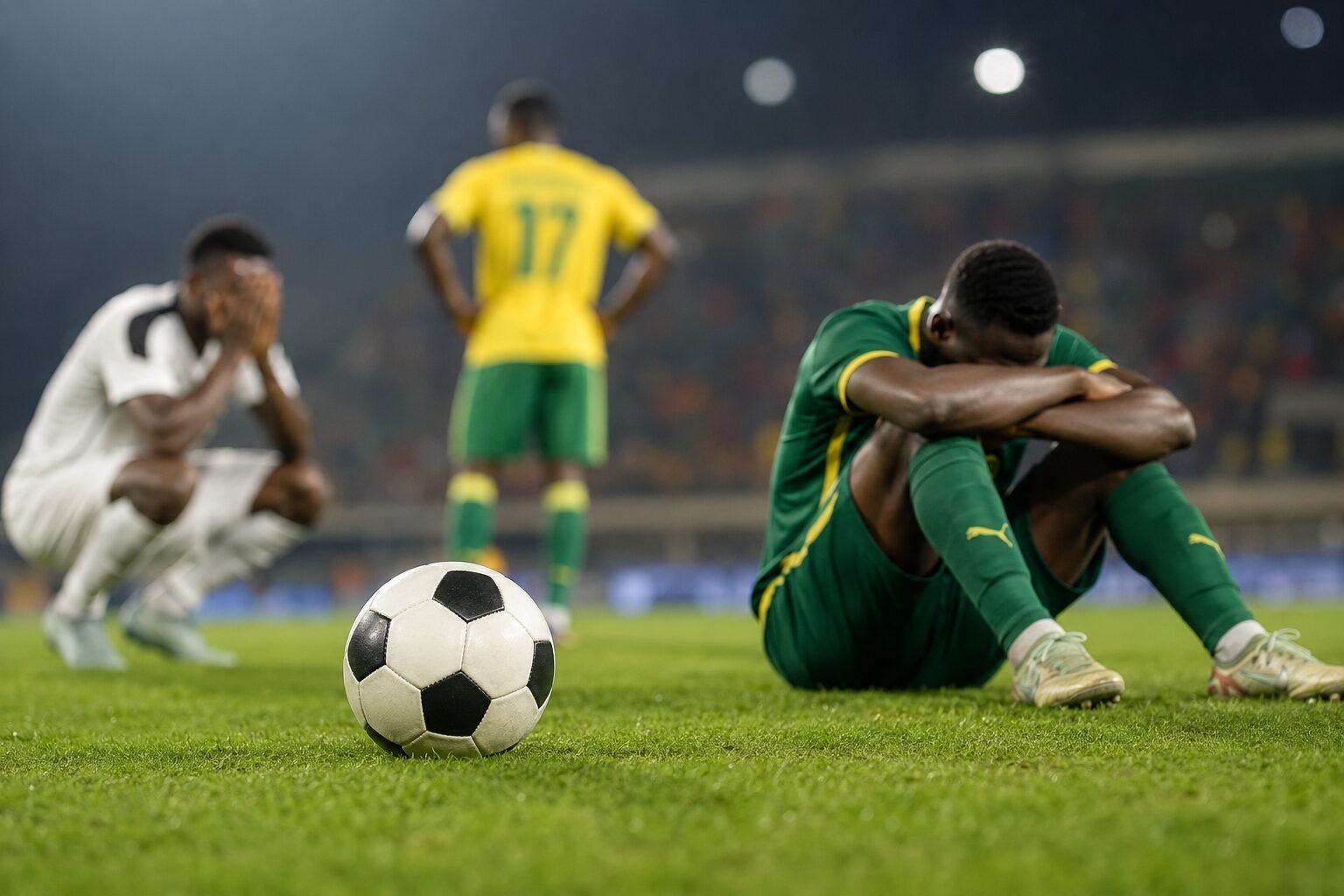
For much of the 2026 FIFA World Cup knockout stage, Africa looked ready to celebrate one of its greatest tournaments.
The Democratic Republic of Congo frustrated England for over 80 minutes. Senegal had Belgium on the ropes. Egypt stunned Argentina by racing into a two goal lead.
Yet all three walked away defeated.
The painful reality is that these were not games lost because African teams lacked talent. They were lost because elite football punishes every lapse in concentration, fitness, game management, and tactical decision making. Against football’s traditional powers, the final ten minutes are often where experience outweighs enthusiasm.
Three Matches, One Painful Pattern
DR Congo 1–2 England
DR Congo produced one of the defensive performances of the tournament. England dominated possession but struggled to break through a disciplined back line led by Chancel Mbemba.
However, after England equalized in the 75th minute, the momentum shifted completely.
Rather than slowing the tempo and disrupting England’s rhythm, DR Congo gradually retreated deeper. Harry Kane eventually found the winning goal in the 86th minute, completing England’s comeback.
The difference was not quality alone. It was England’s ability to keep creating chances until one finally arrived.
Senegal 2–3 Belgium
No African team looked more convincing than Senegal.
They attacked with pace, defended aggressively and built a deserved two goal advantage against Belgium.
But protecting a lead against elite European opposition requires more than defending deeper.
Belgium increased the tempo, stretched Senegal’s defensive shape and forced mistakes. As pressure mounted, Senegal struggled to retain possession, allowing Belgium repeated attacking waves before eventually completing an astonishing comeback.
Instead of controlling possession during crucial moments, Senegal found themselves defending continuously.
Egypt 2–3 Argentina
Egypt delivered perhaps the biggest shock of the Round of 16.
Leading Argentina 2–0 with barely fifteen minutes remaining, they appeared destined for a famous victory.
Instead, Argentina showed why world champions are never beaten until the final whistle.
Cristian Romero scored in the 79th minute.
Lionel Messi equalized four minutes later.
Enzo Fernández completed the comeback in stoppage time.
Even after taking a commanding lead, Egypt struggled to relieve sustained Argentine pressure. Their inability to slow the game, keep possession and move play away from their penalty area allowed Argentina complete territorial dominance during the closing stages.
Why Did This Keep Happening?
1. The Physical Drop Off
Playing against England, Belgium or Argentina means defending for long periods without the ball.
That demands enormous physical effort.
By the closing stages, fatigue begins affecting:
- recovery runs
- pressing intensity
- concentration
- tackling decisions
- positioning
Elite opponents recognize these signs immediately and increase the tempo.
The winning goals did not come by accident. They came after sustained pressure had gradually worn down African defenses.
2. Poor Game Management
Leading a World Cup knockout match is different from chasing one.
Successful teams know how to:
- slow the pace
- win tactical fouls
- recycle possession
- frustrate opponents
- force stoppages
- make timely substitutions
These are often called the “dark arts” of tournament football.
European and South American giants have mastered them over decades.
Several African sides still struggle to manage these moments when protecting narrow leads.
3. Squad Depth
One overlooked factor is the quality available from the bench.
England introduced fresh attacking players.
Belgium continued rotating experienced internationals.
Argentina still had world class options capable of changing the game.
Many African squads experienced a noticeable drop in quality after substitutions.
Fresh legs from stronger squads became decisive in the closing minutes.
4. Mental Pressure
The closer African teams moved toward historic victories, the heavier the psychological burden became.
Players naturally began thinking about the result rather than the process.
Instead of asking:
How do we score the next goal?
the focus shifted toward:
How do we survive?
That subtle change often leads to deeper defending and fewer attacking outlets.
Elite opponents thrive when opponents become passive.
5. Tactical Conservatism
Another recurring theme was retreating too early.
Instead of keeping defensive lines high enough to threaten counter attacks, several African teams allowed opponents to camp around their penalty area.
Once sustained pressure begins, every clearance quickly returns.
Eventually, the breakthrough usually comes.
Modern football increasingly shows that defending by simply sitting deep rarely succeeds against the world’s strongest teams.
Experience Still Matters
England, Belgium and Argentina have collectively played hundreds of World Cup knockout matches.
Many of their players have appeared in:
- UEFA Champions League finals
- European Championship knockouts
- Copa América finals
- previous World Cups
That experience shows most clearly during football’s biggest moments.
When panic sets in, experienced teams remain patient.
They trust another chance will arrive.
It usually does.
Not a Failure, But a Lesson
It would be unfair to describe these defeats as failures.
Instead, they revealed how close African football has come.
DR Congo pushed England to the edge.
Senegal dominated Belgium for long stretches.
Egypt had Argentina staring at elimination before the South Americans produced one of the tournament’s great comebacks.
These performances prove the quality gap has narrowed significantly.
The remaining difference lies in managing decisive moments.
What African Teams Must Improve
For future tournaments, several priorities stand out:
- Develop stronger benches capable of maintaining performance levels after substitutions.
- Improve game management through tactical discipline and smarter control of match tempo.
- Invest in sports science to maintain physical intensity deep into matches.
- Build greater psychological resilience for high pressure knockout situations.
- Encourage coaches to remain tactically proactive rather than automatically protecting leads by defending deeper.
Football matches are no longer decided solely by talent.
They are decided by concentration, tactical maturity and composure under pressure.
The stories of DR Congo, Senegal and Egypt were remarkably similar. Each proved it could compete with football’s elite. Each demonstrated technical quality and tactical organization. Yet each allowed control to slip away when it mattered most.
Suggested Articles:
Portugal 0–1 Spain: Why Portugal Lost, Ronaldo’s Painful Exit and Spain’s World Cup Statement